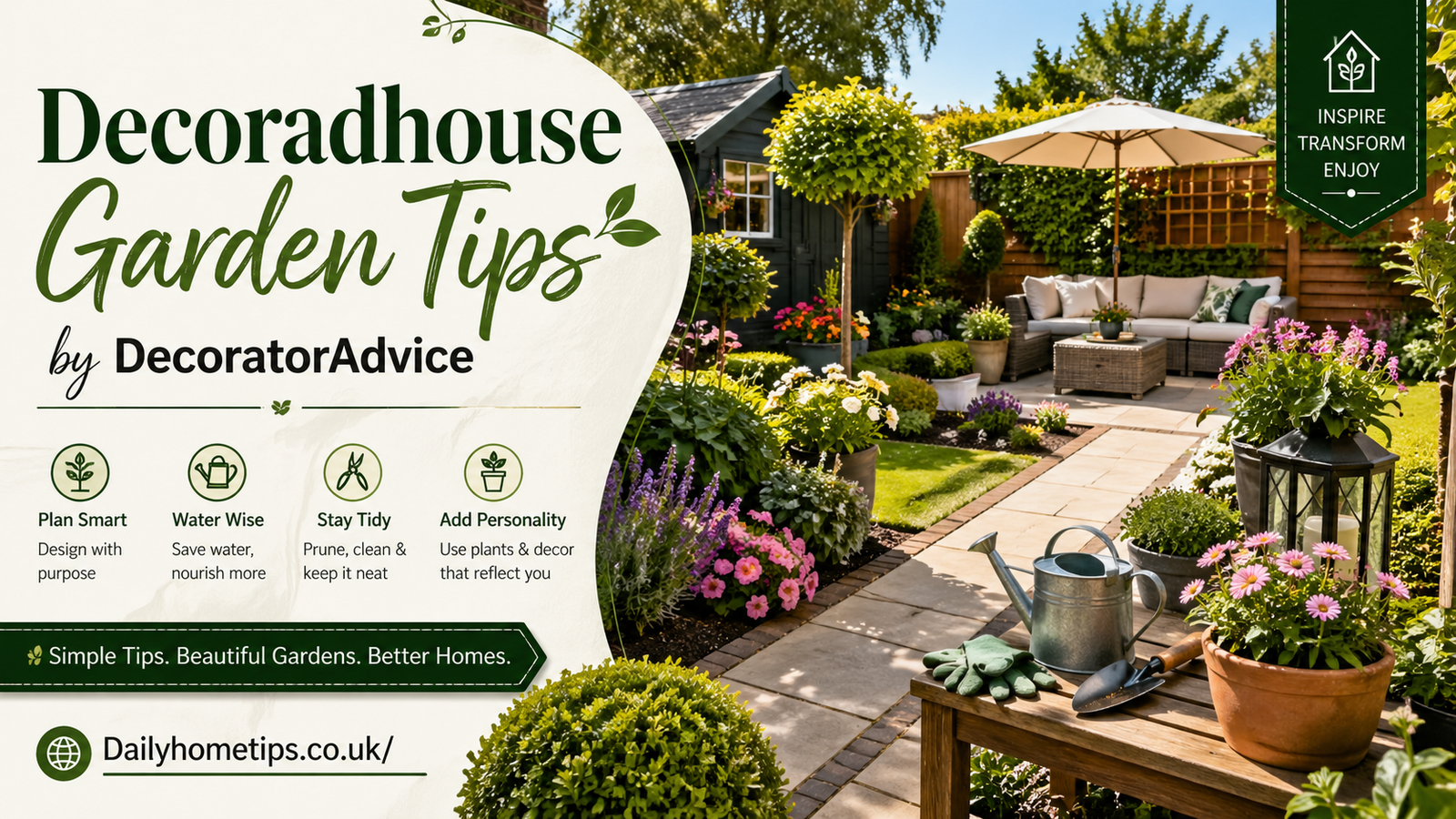
A beautiful garden is more than a collection of plants. It is an outdoor extension of your home, a place where style, comfort, nature, and personal taste come together. With the right planning, even a small yard, patio, balcony, or front entrance can become a peaceful and attractive space that feels fresh throughout the year.
Decoradhouse Garden Tips by DecoratorAdvice can help homeowners understand how to design outdoor areas with purpose instead of randomly placing plants, pots, furniture, and decorations. The main idea is simple: your garden should look beautiful, feel comfortable, and remain easy to maintain. Whether you live in a suburban home, a city apartment, or a house with a large backyard, smart garden ideas can completely improve your outdoor lifestyle.
Understanding Decoradhouse Garden Tips by DecoratorAdvice
Decoradhouse Garden Tips by DecoratorAdvice focuses on combining gardening with outdoor decoration. It is not only about growing flowers or trimming grass; it is about creating a complete outdoor environment. This includes plant selection, garden layout, lighting, seating, pathways, containers, textures, colors, and seasonal care. When these elements work together, your garden becomes more organized, welcoming, and visually appealing.
This approach is useful for beginners as well as experienced homeowners because it encourages simple, practical, and stylish choices. Instead of making the garden complicated, it helps you choose features that suit your space, climate, budget, and lifestyle. A garden should not become a burden. It should be a relaxing place where you can enjoy fresh air, natural beauty, and peaceful moments without feeling overwhelmed by maintenance.
Why Outdoor Space Matters for Modern Homes
Outdoor space has become an important part of modern home design. Many homeowners now see their garden, patio, porch, or backyard as another living area. It can be used for morning coffee, family dinners, weekend gatherings, reading, meditation, gardening, or simply enjoying nature after a busy day. A well-designed garden adds both beauty and function to daily life.
A good outdoor space also increases curb appeal and improves the first impression of a home. Visitors often notice the garden, entrance, lawn, plants, and walkway before they enter the house. When your outdoor area looks neat, balanced, and thoughtfully arranged, it makes the entire property feel more valuable and cared for. Even small improvements can make a major difference in how your home looks from the outside.
Planning Your Garden Before You Start
The first step in creating a beautiful garden is planning. Many people start by buying plants or decorations without understanding their space, and later they struggle with poor placement, overcrowding, or maintenance problems. Before making purchases, observe your garden carefully. Look at sunlight, shade, wind direction, soil condition, drainage, and the amount of space available for plants and seating.
A simple layout can save time, money, and effort. Divide your outdoor area into useful zones such as a sitting corner, flower bed, vegetable area, walkway, children’s play space, or decorative feature wall. When every section has a purpose, the garden feels more organized. Planning also helps you decide which plants, furniture, pots, and lights will fit naturally into your space without making it look crowded.
Choosing a Garden Style That Matches Your Home
A garden looks more professional when its style matches the design of the home. For example, a modern house may look better with clean lines, simple planters, neutral colors, and structured greenery. A farmhouse-style home may suit wooden benches, rustic pots, wildflowers, gravel paths, and natural textures. Matching the garden with the home creates a smooth visual connection between indoor and outdoor spaces.
Popular garden styles include modern, cottage, rustic, minimalist, tropical, Mediterranean, and low-maintenance landscapes. You do not need to copy a style completely, but choosing a clear direction helps you avoid confusion. When colors, plant shapes, furniture, and materials follow one theme, the garden looks intentional rather than random. This is one of the easiest ways to make your outdoor space feel polished and well-designed.
Smart Plant Selection for a Beautiful Garden
Plants are the heart of every garden, so choosing the right ones is very important. The best plants are not always the most colorful or expensive; they are the ones that fit your climate, soil, sunlight, and maintenance routine. A plant that grows well in one region may struggle in another, so always consider local conditions before planting.
For a balanced garden, use a mix of flowers, shrubs, ornamental grasses, herbs, small trees, and evergreen plants. Tall plants can create structure, medium plants add fullness, and low-growing plants soften borders. Native plants are often a smart choice because they usually require less water and care. By combining different heights, textures, and colors, your garden can look attractive in every season.
Creating a Low-Maintenance Outdoor Space
Many homeowners want a garden that looks beautiful without needing constant attention. A low-maintenance garden starts with smart plant choices. Select plants that are suited to your local environment and do not need excessive watering, pruning, or pest control. Drought-tolerant plants, hardy perennials, ornamental grasses, and evergreen shrubs are excellent choices for people with busy schedules.
Mulch is another simple but powerful garden improvement. It helps retain soil moisture, reduces weeds, protects plant roots, and gives garden beds a clean appearance. Raised beds, drip irrigation, container gardening, and simple plant groupings can also reduce maintenance. The goal is not to remove all garden work but to make care easier, more enjoyable, and less time-consuming.
Garden Layout Ideas for Small Spaces
Small gardens can be just as beautiful as large ones when designed properly. The key is to use space wisely. Vertical gardening is one of the best solutions for small yards, balconies, and patios. Wall planters, trellises, hanging baskets, ladder shelves, and railing planters can add greenery without taking up too much floor space.
Furniture should also be selected carefully in a small garden. Slim benches, foldable chairs, bistro sets, and built-in seating can provide comfort without crowding the area. Light-colored pots, mirrors, narrow pathways, and layered plants can make the space feel larger. With careful planning, a small outdoor area can become a cozy retreat full of charm and personality.
Garden Layout Ideas for Large Yards
Large yards offer more design possibilities, but they also need structure. Without a clear layout, a large garden can feel empty, messy, or disconnected. The best approach is to divide the space into different zones. You might have a dining area, lawn, flower border, fire pit corner, vegetable garden, pathway, and quiet reading space.
Pathways are especially important in larger gardens because they guide movement and connect different sections. Trees, hedges, pergolas, seating areas, and water features can also help organize the space. Repetition of plants, colors, and materials brings unity to a large garden. Instead of filling every corner, leave some open space so the garden feels calm and breathable.
Using Pathways to Improve Garden Design
Pathways are both practical and decorative. They help people move through the garden comfortably while also shaping the overall design. A straight path gives a formal and modern feeling, while a curved path creates a softer and more natural look. The type of pathway you choose should match the style of your home and garden.
Common pathway materials include gravel, stepping stones, bricks, pavers, wood, and natural stone. Borders made with plants, lights, stones, or edging can make pathways look more attractive. A well-designed path encourages visitors to explore the garden and creates a sense of flow. It also prevents people from walking over grass, soil, or delicate plants.
Outdoor Seating and Comfort Ideas
A garden becomes more useful when it has a comfortable place to sit. Seating allows you to enjoy your outdoor space instead of simply looking at it. Depending on the size of your garden, you can add a bench, outdoor sofa, swing chair, dining set, lounge chair, or small bistro table. The seating should match the purpose of the area.
Comfort can be improved with cushions, outdoor rugs, umbrellas, shade sails, pergolas, and soft lighting. Place seating where there is a pleasant view, enough privacy, and suitable shade. If the area gets strong afternoon sun, consider adding a shade structure or placing furniture under a tree. A comfortable seating area can turn even a simple garden into a favorite part of the home.
Decorating with Pots and Planters
Pots and planters are easy ways to add color, height, and personality to a garden. They are especially useful for patios, balconies, porches, decks, and small yards. Large planters can act as focal points, while smaller pots can be grouped together for a layered look. Different heights and shapes create visual interest.
Choose pots that match your garden style. Clay pots suit rustic and Mediterranean spaces, while sleek ceramic or concrete planters work well in modern gardens. Wooden planters add warmth, and metal containers can create an industrial look. You can use containers for flowers, herbs, succulents, ornamental grasses, small shrubs, or seasonal displays.
Vertical Gardening for Better Space Use
Vertical gardening is a smart solution when ground space is limited. It allows you to grow plants upward using walls, fences, trellises, shelves, hanging baskets, or green panels. This method is perfect for small yards, apartment balconies, patios, and narrow side gardens. It also adds height and depth to the overall design.
Climbing plants, trailing flowers, herbs, and compact vegetables work well in vertical gardens. You can use trellises for vines, wall pockets for herbs, or hanging baskets for colorful flowers. Vertical features can also hide unattractive walls or fences. When used correctly, they make the garden feel fuller without making it crowded.
Adding Color and Texture to Your Garden
A beautiful garden should not depend only on flowers. Flowers are lovely, but they may bloom for a limited time. Texture, foliage, bark, stones, containers, and outdoor fabrics can keep the garden interesting throughout the year. Plants with different leaf shapes and colors can create depth even when flowers are not blooming.
A limited color palette often works better than too many colors. For example, you might choose green, white, and purple for a calm look, or yellow, orange, and red for a warm, lively space. Texture also matters. Soft grasses, glossy leaves, rough stones, wooden furniture, and smooth pots can all work together to create a rich outdoor design.
Layering Plants for a Professional Look
Layering is one of the most effective design techniques in gardening. It means arranging plants by height and depth. Taller plants usually go at the back, medium plants in the middle, and shorter plants near the front. This creates a full, natural, and organized appearance. It also prevents smaller plants from being hidden.
Layering works in flower beds, borders, container groups, and along fences. You can also layer textures by combining shrubs, grasses, flowers, and ground covers. Repeating some plants throughout the garden creates rhythm and unity. This simple technique can make your outdoor area look like it was designed by a professional landscaper.
Outdoor Lighting Ideas for Evening Beauty
Lighting can completely change the mood of a garden after sunset. During the day, plants and colors are the main attraction, but at night, lighting creates warmth, safety, and atmosphere. String lights, lanterns, solar path lights, wall lights, deck lights, and spotlights can all be used in different ways.
Pathway lights make walking safer, while spotlights can highlight trees, sculptures, water features, or architectural details. Warm lighting usually feels more comfortable and inviting than harsh white light. You do not need too many lights; a few well-placed fixtures can create a magical evening setting. Lighting also extends the time you can enjoy your garden.
Creating Focal Points in the Garden
A focal point is something that naturally attracts attention. Every garden benefits from at least one strong focal point because it gives the eye a place to rest. Without a focal point, the garden may feel scattered or unfinished. A focal point can be simple or dramatic depending on your style and budget.
Examples include a large planter, water fountain, small tree, sculpture, birdbath, fire pit, bench, pergola, or decorative wall. The key is to choose one main feature and place it where it can be easily seen. Avoid adding too many focal points because they can compete with each other and make the garden feel busy.
Water Features and Natural Elements
Water features bring calmness and movement to a garden. The sound of flowing water can make an outdoor space feel peaceful and refreshing. You do not need a large pond to enjoy this effect. A small fountain, birdbath, wall fountain, pond bowl, or tabletop water feature can work beautifully in many spaces.
Natural materials also improve the garden’s atmosphere. Stone, wood, gravel, bamboo, clay, and natural fibers create warmth and texture. These materials blend well with plants and help the garden feel more connected to nature. When water and natural textures are used thoughtfully, the outdoor space becomes more relaxing and elegant.
Budget-Friendly Garden Decoration Ideas
A beautiful garden does not always require a large budget. Many improvements can be made with simple and affordable changes. Repainting old pots, adding fresh mulch, installing solar lights, using gravel borders, refreshing cushions, or creating DIY planters can quickly improve the appearance of your garden.
You can also grow plants from seeds, cuttings, or divisions to save money. Repurposed wooden crates, old baskets, unused containers, and simple garden edging can add charm without high cost. Focus on one area at a time instead of trying to redesign the entire garden at once. Small improvements often create the biggest visual impact.
Sustainable Garden Ideas for Modern Homes
Sustainable gardening is becoming more important for homeowners who want beautiful spaces that also support the environment. Native plants, composting, rainwater collection, organic soil improvement, and pollinator-friendly flowers are all smart choices. These ideas help reduce waste, save water, and create a healthier garden ecosystem.
A sustainable garden can attract bees, butterflies, birds, and beneficial insects. It can also reduce the need for chemical fertilizers and pesticides. Instead of fighting nature, sustainable gardening works with it. This type of garden is not only responsible but also full of life, movement, and natural beauty.
Seasonal Garden Care Tips
Every season brings different garden needs. In spring, clean garden beds, remove dead leaves, refresh mulch, prune damaged branches, and plant new flowers. This is also a good time to check soil health and prepare containers. Spring work sets the foundation for a healthy and colorful garden.
In summer, focus on watering, shade, pest control, and deadheading flowers. In fall, plant bulbs, collect leaves for compost, trim selected plants, and prepare beds for cooler weather. In winter, protect delicate plants, clean garden tools, and plan future improvements. Seasonal care keeps the garden attractive and prevents small problems from becoming large ones.
Common Garden Design Mistakes to Avoid
One common mistake is overcrowding plants. Small plants may look harmless at first, but many grow larger over time. If they are planted too closely, they compete for sunlight, water, and nutrients. Overcrowding also makes the garden harder to maintain and can increase the risk of pests and disease.
Another mistake is choosing plants without considering sunlight, soil, and climate. A shade-loving plant may fail in full sun, while a sun-loving plant may struggle in a dark corner. Poor drainage, mismatched furniture, too many colors, and excessive decorations can also weaken the design. A successful garden needs balance, not clutter.
Decoradhouse Garden Tips by DecoratorAdvice for Beginners
Beginners should start small. Instead of redesigning the entire yard, choose one corner, one flower bed, or one container group. This makes the process easier and less stressful. Start with a few easy-care plants, basic tools, good soil, and a simple watering routine. Confidence grows with practice.
Decoradhouse Garden Tips by DecoratorAdvice can guide beginners toward simple decisions that create visible results. For example, adding mulch, placing three matching pots near the entrance, installing solar lights, or planting colorful perennials can quickly improve a space. The goal is to build a garden step by step while learning what works best in your home environment.
How to Make Your Garden Look Professionally Designed
Professional-looking gardens often use repetition, balance, and clean lines. Repeating the same plant, color, or material in different areas creates unity. For example, using the same type of planter near the entrance and patio can connect two spaces visually. Repetition makes the garden feel planned and organized.
Clean edges also make a big difference. Trimmed borders, defined beds, clear pathways, and tidy containers create a polished appearance. Hide unattractive areas with screens, tall plants, trellises, or decorative panels. Keep décor simple and purposeful. A garden does not need many items to look stylish; it needs the right items in the right places.
Designing a Front Yard Garden
A front yard garden should feel welcoming because it creates the first impression of the home. Focus on neat pathways, healthy plants, balanced borders, and a clear entrance. Plants should frame the home rather than hide it. Choose greenery that enhances the architecture and keeps the entrance visible.
Curb appeal can be improved with symmetrical planters, flowering shrubs, fresh mulch, pathway lights, and a clean lawn edge. The front yard should be attractive but not overly complicated. Since it is visible from the street, regular maintenance matters. Simple, tidy, and balanced designs usually work best for front garden spaces.
Designing a Backyard Garden
A backyard garden can be more personal and flexible than a front yard. It can include seating, dining, play areas, vegetable beds, flower borders, fire pits, or relaxation corners. Think about how your family will use the space before choosing the design. A backyard should support your lifestyle.
Privacy is also important in backyard design. Fences, hedges, tall grasses, pergolas, screens, and climbing plants can create a more comfortable environment. Add lighting and seating to make the space usable in the evening. With thoughtful planning, a backyard can become a peaceful outdoor room for everyday living.
Patio and Balcony Garden Ideas
Patios and balconies may have limited space, but they can still become beautiful garden areas. Containers are the best choice for these spaces because they are flexible and easy to move. Use a combination of large pots, hanging baskets, railing planters, and compact furniture to create a stylish setup.
Choose plants that fit the amount of sunlight your balcony or patio receives. Herbs, succulents, flowers, dwarf shrubs, and trailing plants can all work well. Outdoor rugs, lanterns, cushions, and small tables can add comfort. Even a small balcony can feel like a private garden when decorated with care.
Using Garden Furniture the Right Way
Garden furniture should be attractive, comfortable, and suitable for outdoor conditions. Weather-resistant materials such as treated wood, metal, rattan, resin, and outdoor fabric are practical choices. Before buying furniture, measure the space and make sure there is enough room to walk around comfortably.
The furniture style should match the garden design. A modern garden may look better with sleek furniture, while a cottage garden may suit wooden benches or vintage-style chairs. Avoid overcrowding the space with too many pieces. One comfortable seating area is often better than several poorly placed chairs.
Garden Privacy Ideas
Privacy can make a garden feel more relaxing and personal. Many homeowners want outdoor areas where they can sit, eat, or talk without feeling exposed. Privacy can be created naturally with hedges, tall shrubs, bamboo, climbing plants, or ornamental grasses. These options add greenery while blocking unwanted views.
Decorative screens, fences, pergolas, curtains, and trellises are also useful. A combination of plants and structures often works best. For example, a wooden screen covered with climbing flowers can provide privacy and beauty at the same time. Good privacy design should feel natural, not closed or heavy.
Soil and Watering Basics
Healthy soil is the foundation of a healthy garden. Even beautiful plants will struggle if the soil is poor. Add compost, organic matter, and mulch to improve soil texture and nutrients. Before planting, check whether your soil drains well or holds too much water. Different plants need different soil conditions.
Watering should be consistent but not excessive. Many plants prefer deep watering less often instead of light watering every day. Early morning is usually a good time to water because plants can absorb moisture before strong heat arrives. Grouping plants with similar water needs makes garden care easier and more efficient.
Garden Décor That Adds Personality
Garden décor should support the design rather than distract from it. Decorative items such as lanterns, sculptures, birdhouses, outdoor rugs, cushions, wall art, and plant stands can add personality. The best décor reflects your taste while still feeling connected to the natural environment.
Avoid filling the garden with too many objects. Too much décor can make the space look cluttered and reduce the beauty of plants. Choose a few meaningful pieces and place them carefully. A single sculpture, a beautiful bench, or a set of matching lanterns can make a stronger impression than many unrelated decorations.
Family-Friendly Garden Ideas
A family-friendly garden should be safe, comfortable, and enjoyable for everyone. If children use the space, include open areas for play, soft grass, safe pathways, and non-toxic plants. Avoid sharp edges, unstable pots, slippery surfaces, and thorny plants near play zones. Safety and beauty can work together.
Families may also enjoy vegetable beds, herb gardens, bird feeders, or butterfly-friendly flowers. These features make the garden educational and interactive. Seating areas should allow adults to relax while watching children play. A well-planned family garden creates memories and encourages everyone to spend more time outdoors.
Garden Ideas for Relaxation and Wellness
A garden can support mental wellness by creating a calm and restorative environment. Soft colors, comfortable seating, gentle lighting, fragrant plants, and natural sounds can reduce stress. Lavender, jasmine, rosemary, mint, and roses can add soothing scents. Water features and wind chimes can also create a peaceful mood.
For a relaxation garden, avoid clutter and strong visual noise. Choose simple plantings, natural materials, and quiet corners. Add a chair, hammock, bench, or meditation area where you can disconnect from screens and daily pressure. Even a small peaceful corner can improve your outdoor experience.
Bringing Indoor Style Outdoors
One modern design trend is treating the garden like an outdoor room. This means using furniture, rugs, cushions, lighting, and décor in a way that feels as comfortable as the inside of your home. The outdoor space should reflect your personal style while remaining practical for weather conditions.
You can connect indoor and outdoor spaces by repeating colors, textures, or materials. For example, if your living room has neutral tones, your patio can use similar cushions and planters. This creates a smooth transition from inside to outside. A garden that feels connected to the home appears more elegant and complete.
Final Thoughts on Decoradhouse Garden Tips by DecoratorAdvice
Decoradhouse Garden Tips by DecoratorAdvice offers a practical way to create outdoor spaces that are beautiful, comfortable, and easy to enjoy. A successful garden does not depend on size or budget. It depends on thoughtful planning, suitable plants, balanced décor, comfortable seating, and regular care.
Start with the basics and improve your garden step by step. Choose a style, understand your space, select the right plants, add useful features, and keep the design simple. With patience and creativity, any yard, balcony, patio, or garden corner can become a relaxing outdoor retreat that adds value and beauty to your home.
FAQs
What are Decoradhouse Garden Tips by DecoratorAdvice?
Decoradhouse Garden Tips by DecoratorAdvice are practical outdoor design ideas that combine gardening, decoration, layout planning, plant selection, and maintenance. These tips help homeowners create gardens that are attractive, functional, and easy to manage. They can be used for backyards, front yards, patios, balconies, and small outdoor corners.
How can I make my garden look beautiful on a low budget?
You can improve your garden on a low budget by using mulch, repainting old pots, adding solar lights, growing plants from seeds, and creating simple DIY borders. Focus on one area at a time instead of changing the whole space. Clean edges, healthy plants, and neat containers can make a big difference.
What is the easiest way to start decorating a garden?
The easiest way to start is by choosing one small section of your garden and improving it first. Add a few easy-care plants, fresh mulch, one attractive planter, and simple lighting. This gives you quick results without feeling overwhelmed. Once that area looks good, you can slowly expand the design.
Which plants are best for a low-maintenance garden?
Native plants, hardy perennials, ornamental grasses, evergreen shrubs, and drought-tolerant plants are usually good choices for low-maintenance gardens. These plants often need less water, pruning, and care than delicate varieties. The best options depend on your local climate, sunlight, soil type, and available space.
How do I make a small garden look bigger?
A small garden can look bigger with vertical planters, light-colored pots, slim furniture, mirrors, hanging baskets, and simple pathways. Avoid overcrowding the area with too many plants or decorations. Use layered planting and keep the design clean. Open space is important, even in a small garden.
What are common garden decoration mistakes?
Common mistakes include overcrowding plants, ignoring sunlight, using too many colors, choosing unsuitable furniture, poor drainage, and adding too much décor. Another mistake is buying plants without knowing their mature size. A beautiful garden needs balance, planning, and practical choices that suit the space.
Can I use garden design tips for a balcony or patio?
Yes, many garden design ideas work very well for balconies and patios. Container gardening, vertical planters, hanging baskets, outdoor rugs, compact furniture, and lighting can transform small outdoor spaces. The key is to choose plants and décor that fit the available space and sunlight conditions.
How often should I update my garden design?
You can make small seasonal updates every few months by changing flowers, refreshing mulch, cleaning containers, or adding new décor. Major layout changes can be planned once a year. Regular small improvements keep the garden fresh without requiring a complete redesign every season.
What is the best way to make a garden look professional?
The best way to make a garden look professional is to use repetition, clean borders, balanced plant heights, matching materials, and a clear focal point. Keep the design simple and avoid clutter. Well-maintained plants, organized pathways, and coordinated décor can make any garden look more polished.
